
Calm redness and smooth skin with Laser Genesis at Artistry Skin & Hormone in Littleton, CO. Gentle laser rejuvenation.

Non-ablative 1064 nm Nd:YAG laser
About twenty minutes
Face and neck
Mild. Most patients describe a warming sensation, no anesthetic needed
None. Patients return to normal activity and may apply makeup the same day
A course of treatments spaced a few weeks apart, then ongoing maintenance
Gradual, building across the series as collagen responds
Skin that flushes easily, breaks out, or shows fine vessels across the nose and cheeks tends to resist the treatments meant to fix it. Aggressive resurfacing can inflame reactive skin further, and heavy products often make congestion worse. Laser Genesis in Littleton, CO, takes the opposite approach by warming the upper layers of the skin gently enough that there is no peeling, no visible recovery, and nothing to hide afterward.
The treatment takes about twenty minutes and is comfortable enough that most patients read or talk through it. Because there is no downtime, it fits into a lunch break and can be repeated regularly, which is how the results actually accumulate. Patients across Littleton, CO, come to Artistry Skin & Hormone for Laser Genesis both to settle persistent redness and as steady maintenance for overall skin quality.
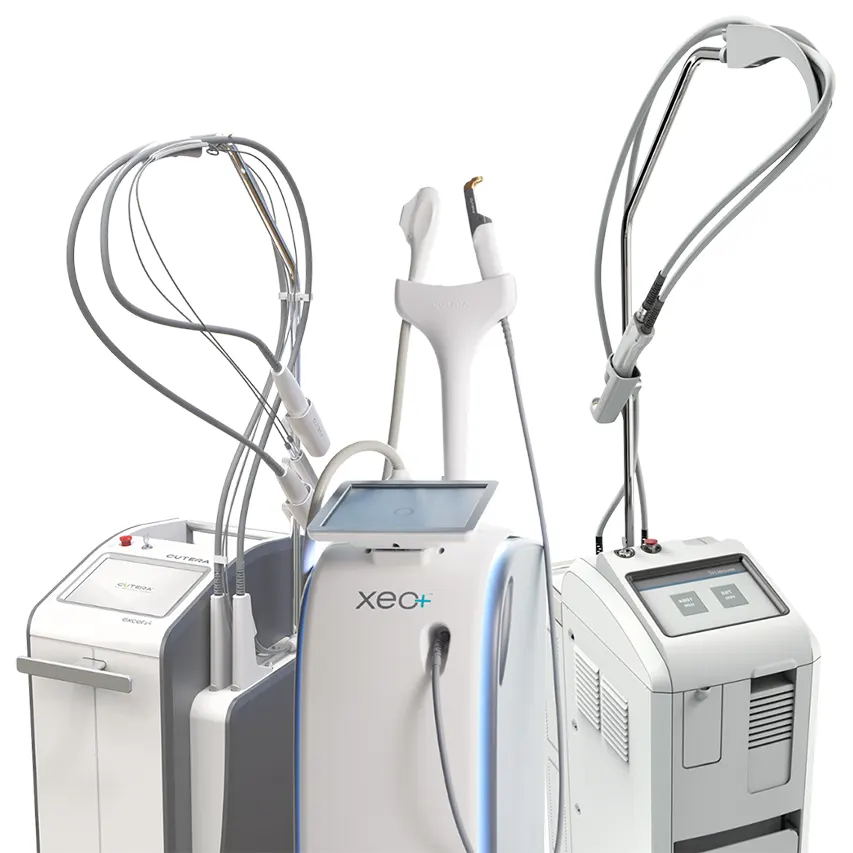
Laser Genesis is a non-ablative laser treatment that uses a 1064 nm Nd: YAG wavelength to warm the upper dermis without breaking the surface of the skin. Non-ablative means nothing is removed or vaporized, which is why there is no peeling and no recovery period. The energy passes through the outer layer and deposits heat below it, where collagen and blood vessels respond.
That gentleness is what makes it suitable for skin that other devices tend to provoke. Rosacea-prone, reactive, and acne-inflamed skin in Littleton, CO, often tolerates Laser Genesis when stronger resurfacing is not an option yet. It also means the treatment works cumulatively rather than dramatically, so it suits patients who want steady improvement over a course rather than one intense session with a week of recovery.
The handpiece is passed repeatedly over the treatment area, building gentle heat in the upper dermis rather than delivering it in a single aggressive pulse. That controlled warming triggers a collagen response, which over a series of sessions is what plumps the skin, softens fine lines, and creates the light tightening effect patients notice around the pores.
The same heat acts on the small vessels that drive visible redness. Superficial capillaries and the diffuse flushing associated with rosacea respond well, which is why the treatment is used across the nose, cheeks, and neck where those vessels sit closest to the surface. For patients dealing with acne and acne-related inflammation, the calming effect on inflamed skin is the primary benefit.
Because the wavelength does not rely on melanin absorption the way broad-spectrum light does, Laser Genesis carries a different risk profile from intense pulsed light. That distinction matters for patients in Littleton, CO, with deeper skin tones and is covered in more detail in the comparison section below.
Diffuse flushing and persistent facial redness are among the changes patients report most consistently.
Fine capillaries across the nose, cheeks, and neck become less noticeable as treatments accumulate.
Inflamed, congested skin often settles over a course, which patients dealing with active breakouts in Littleton, CO, tend to notice first.
The collagen response tightens the surrounding tissue, which makes pores appear smaller over time.
New collagen adds subtle fullness and a light tightening effect across the treated area.
Roughness, dullness, and patchy tone improve gradually rather than all at once.
There is no peeling, flaking, or visible recovery, and makeup can go on immediately afterward.
Patients whose skin reacts badly to stronger resurfacing frequently tolerate Laser Genesis well.
The most common request, treating redness, texture, and pore appearance across the whole face in one session.
Addresses early fine lines and surface texture across a broad, flat area.
The primary site for diffuse flushing and rosacea-related redness.
Where superficial vessels and enlarged pores are usually most visible.
The nasal alae, where broken capillaries commonly cluster and are hardest to cover.
Frequently treated alongside the jawline for congestion and breakout-related inflammation.
Where adult hormonal breakouts often concentrate.
Treated for redness, crepey texture, and visible vessels, and commonly included with a full face session in Littleton, CO.
Facial redness, rosacea and rosacea-prone skin, flushing, superficial facial veins, and broken capillaries.
Active acne, acne-related inflammation, and enlarged pores.
Uneven skin texture, uneven skin tone, and dull or tired-looking skin.
Fine lines, loss of skin firmness, and declining collagen production.
Sensitive or reactive skin that flares in response to stronger treatments.
Patients weighing options for a specific issue may find the redness, rosacea, and vascular lesions and uneven skin tone and pigmentation pages useful, since both compare the full range of treatments offered in Littleton, CO, rather than a single device.
Good candidates include adults with persistent facial redness, rosacea-prone skin, active or inflamed acne, enlarged pores, or early textural change who want improvement without recovery time. Because the 1064 nm wavelength does not depend on melanin absorption, it is generally better tolerated across a wider range of skin tones than intense pulsed light, though every patient is still evaluated individually before treatment.
Laser Genesis is not the right choice for everyone. Patients with active skin infection or open lesions in the treatment area need to wait until the skin has settled, and those taking isotretinoin or photosensitizing medications require a discussion about timing. Recent sun exposure or a fresh tan will usually postpone a session. Patients seeking dramatic resurfacing of deep wrinkles or significant scarring in Littleton, CO, are typically better served by a stronger option, and the consultation will say so directly rather than selling a course that will not meet the goal.
The skin is cleansed, makeup is removed, and protective eyewear is fitted. No numbing cream or anesthetic is required, which is part of why the appointment is short. A brief check confirms nothing has changed since the consultation, particularly recent sun exposure or new medications.
The handpiece is held slightly above the skin and moved in steady passes across the area. Most patients describe a building warmth, similar to standing near a heater, with no sharp sensation. The provider works section by section and monitors temperature throughout, and the whole treatment usually takes about twenty minutes for a full face.
Mild warmth and light pink flushing are normal and typically settle within an hour or two. There is no peeling, no dressing, and no restriction on returning to work. Patients across Littleton, CO, routinely schedule sessions on a lunch break and apply makeup before leaving.
Stay out of direct sun and skip self-tanning products for at least two weeks before the appointment.
Stop retinoids, exfoliating acids, and benzoyl peroxide several days beforehand unless told otherwise.
Photosensitizing medications, recent isotretinoin, and antibiotics all affect timing and need to be raised in advance.
Makeup is removed at the office, but coming without it saves time in a twenty-minute appointment.
Patients prone to cold sores may be prescribed antiviral medication before treatment near the mouth.
Laser Genesis works cumulatively, so book the course at the outset rather than one session at a time in Littleton, CO.
Broad-spectrum SPF 30 or higher protects the treated skin and preserves the results between sessions.
Hold off on retinoids and acids until the skin feels completely normal again.
A bland moisturizer is enough. Nothing occlusive or heavily fragranced is needed.
Light flushing for an hour or two is normal and is not a sign that anything went wrong.
Saunas, hot tubs, and intense workouts can prolong the flushing, so leave them until tomorrow.
Spacing matters more than any single session. Patients in Littleton, CO, who stay on cadence see the fullest result.
Laser Genesis is a series treatment rather than a one-off. Improvement builds across a course of sessions spaced a few weeks apart, with most patients completing several before judging the result. Redness and skin comfort often shift earliest, while collagen-driven changes to firmness, pore appearance, and fine lines emerge more slowly because new collagen takes months to form.
Once the initial course is finished, results hold with periodic maintenance. Skin continues to age and rosacea remains a chronic condition, so treatment manages both rather than ending them, and patients who stop entirely will gradually see redness and texture return toward baseline. Many patients in Littleton, CO, settle into a maintenance rhythm alongside their regular skincare and find the membership program makes that cadence easier to sustain. Results from treatments across the practice can be viewed in the before and after gallery.
Combines IPL, radiofrequency tightening, and fractional resurfacing in one visit, which suits patients whose concerns extend past redness into laxity and pigment.
Adds a mechanical collagen stimulus that works through a different pathway and is often alternated with Laser Genesis across a treatment plan.
Address surface pigment and congestion that laser warming does not target, rounding out a texture and tone plan.
For patients treating active acne, a structured topical program alongside Laser Genesis addresses both the inflammation and the underlying skin condition.
A useful addition where firmness along the jawline and neck is a priority beyond what Laser Genesis delivers on its own.
The most common question on this page is how Laser Genesis differs from an IPL photofacial, since both treat redness and both use light. The short answer is that IPL targets pigment and vessels by having colored structures absorb broad-spectrum light, while Laser Genesis warms tissue in bulk without targeting pigment at all. That is why IPL is the stronger choice for brown spots and sun damage, and why Laser Genesis is the better fit for reactive, rosacea-prone, and deeper-toned skin.
| Treatment | Technology | Best For | Downtime | Deeper Skin Tones |
|---|---|---|---|---|
| Laser Genesis | Non-ablative 1064 nm Nd:YAG | Redness, rosacea, acne inflammation, pores, early texture | None | Generally well suited, no melanin targeting |
| Venus Versa IPL Photofacial | Broad-spectrum intense pulsed light | Brown spots, sun damage, pigment, defined vessels | Minimal, darkening then flaking of spots | Requires careful assessment |
| Cutera XEO Vascular Laser | Targeted vascular laser | Individual visible veins and defined vascular lesions | Minimal, possible bruising | Assessed case by case |
| Venus Viva MD Skin Resurfacing | NanoFractional radiofrequency | Texture, scarring, deeper resurfacing needs | Several days | Radiofrequency is not pigment dependent |
| Lumenis AcuPulse CO2 Laser | Ablative fractional CO2 | Significant wrinkles, scarring, sun damage | About a week | Requires careful assessment |
Patients frequently combine these rather than choosing one. A consultation in Littleton, CO, maps which concern each device is best placed to address and in what order.
Choosing between six different light and energy devices is harder than choosing a provider for any one of them. Artistry Skin & Hormone runs the full range in-house, which means the recommendation for patients in Littleton, CO, comes from matching the concern to the right device rather than fitting every concern to whatever is in the room.
Founder Laura Carlsen, AGNP, Certified Laser Specialist, LE, spent nearly a decade as Clinic Manager at Colorado Skin and Vein, where she built her expertise in laser and vein treatment.
Nd:YAG, IPL, vascular laser, radiofrequency resurfacing, and fractional CO2 are all available, so the plan is not limited by the equipment.
Treatments are performed by licensed aestheticians who hold Certified Laser Specialist credentials, not by general staff.
Redness and breakouts are assessed alongside the hormonal and lifestyle factors that often drive them rather than treated purely at the surface.
Patients whose goals call for a stronger option are told so, even when it means recommending fewer sessions.
The approach favors steady change that does not announce itself, which is the practice standard across every service.
Artistry Skin & Hormone proudly offers Laser Genesis in Littleton, CO, welcoming patients from surrounding communities seeking laser skin rejuvenation. Our conveniently located office allows us to serve clients from:
Cost depends on the area treated and how many sessions the plan calls for, and because Laser Genesis is a series treatment, most patients are quoted for a package rather than a single visit. Pricing is reviewed at the consultation before anything is booked; financing is available through Cherry and CareCredit, and the membership program offers a further route for patients treating on an ongoing cadence.
It is one of the better-suited light-based options. The 1064 nm Nd: YAG wavelength penetrates without relying on melanin absorption, so it does not carry the same pigment-related risk profile that broad-spectrum IPL does for deeper skin tones. Every patient is still assessed individually, and settings are adjusted accordingly, but this is a treatment that can usually be offered where IPL would give pause.
IPL uses broad-spectrum light absorbed by pigment and vessels, which makes it effective on brown spots and sun damage. Laser Genesis uses a single wavelength to warm tissue in bulk with no pigment targeting, which makes it better for diffuse redness, reactive skin, and deeper skin tones. The comparison table above sets both side by side, and many patients in Littleton, CO, end up using them for different concerns.
Before treatment, avoid sun exposure and self-tanner for about two weeks and pause retinoids, acids, and benzoyl peroxide for several days. Afterward, wear daily broad-spectrum SPF, keep the routine gentle until the skin feels normal, and skip saunas, hot tubs, and hard workouts for the rest of the day.
Most patients complete an initial course of sessions spaced a few weeks apart, then move to periodic maintenance to hold the result. The right interval depends on the concern, since rosacea-driven redness usually needs a steadier rhythm than general skin quality does. The provider sets a specific cadence at the consultation.
It is a non-ablative treatment, meaning the surface of the skin is never broken, which is why there is no peeling or recovery. Risk is low when the treatment is performed by a trained provider at appropriate settings. The main precautions are recent sun exposure, active infection in the area, and certain photosensitizing medications, all of which are screened for beforehand.
Most patients describe a gradual warming rather than pain, and no numbing cream is needed. The sensation builds as the provider works across an area and eases as soon as the handpiece moves on. Patients who find the warmth intense should say so during treatment, since settings can be adjusted.
Laser Genesis works cumulatively, so a course is recommended rather than a single session. The number depends on the concern and how the skin responds, with inflammatory redness and acne often needing a different course length than general texture and tone. The plan is set at the consultation and reviewed as treatment progresses.
It is one of the more commonly chosen options for rosacea-prone skin in Littleton, CO, because it calms diffuse flushing without the aggressive surface disruption that can trigger a flare. Rosacea is a chronic condition, so treatment manages symptoms rather than resolving them, and ongoing maintenance is part of the plan.
Skin often looks calmer and feels more comfortable within the first few sessions, while collagen-driven changes to firmness, pores, and fine lines take longer because new collagen forms over months. Improvement continues for a period after the final session in a course.

IPL photofacials target redness, sun spots, pigmentation, and uneven tone using pulses of light energy. This treatment also supports collagen stimulation for overall skin clarity. It is commonly used on the face, neck, chest, and hands.

TriBella combines IPL photofacial, RF skin tightening, and fractional resurfacing in one comprehensive treatment. It addresses tone, texture, and laxity simultaneously. This is an excellent option for full-face rejuvenation with balanced results.
Venus Viva MD uses NanoFractional RF technology to resurface the skin with minimal downtime. It refines pores, smooths texture, and improves uneven tone. This option is popular for patients seeking noticeable rejuvenation without aggressive recovery.